IBM’s new Bluemix Local System

IBM’s new Bluemix Local System

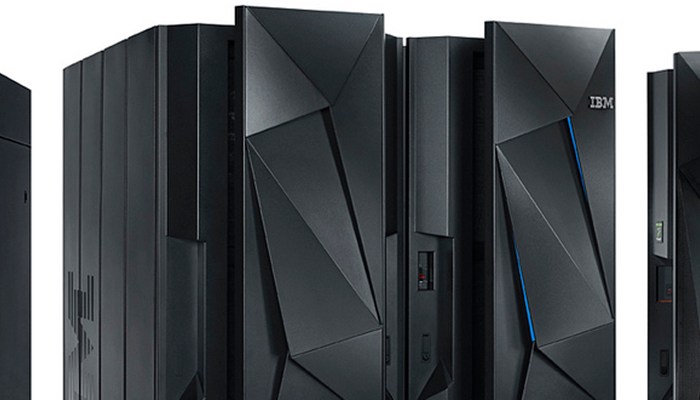
Yesterday IBM announced the new Bluemix Local System, the third generation successor to our Intel-based PureApplication System. There are three exciting new developments here:

I’m very proud of our team’s accomplishment in delivering the Bluemix Local System!

VMware product overview

VMware product overview

For my own benefit, I spent some time summarizing VMware’s product family as it stands today:

  • Data Center Virtualization and Cloud Infrastructure
    • vSphere: umbrella brand for VMware’s family of virtualization products (hypervisor, server, etc.); also refers to the vSphere Client that manages vCenter server and vSphere hypervisor (formerly ESXi)
    • vSphere with Operations Management: vSphere offering that provides added operational capabilities such as health and performance monitoring, and operations automation
    • vCenter Server: basic foundation for managing and coordinating one or more hypervisors. Consists of Platform Services Controller (PSC, which provides SSO, license, and certificate services) and vCenter Server components (provides remainder of vCenter services).
    • VMware Integrated Open Stack (VIO): OpenStack API; not a mere shim, but rather a somewhat sizeable deployment
    • vCloud Director: management of clouds, including SDDC provisioning, multi-tenancy
  • Foundational free products
    • vSphere Hypervisor: formerly known as ESXi
    • vCenter Converter: conversion tool for VM disk formats
    • Software Manager: download tool for VMware suites and products
  • Networking and Security
    • NSX: network virtualization / SDN
  • Storage and Availability
    • Virtual SAN: integrates with various storage offerings to provide storage management (including replication and mirroring) and software-defined storage
    • Site Recovery Manager (SRM): disaster recovery planning and orchestration
  • Hyper-Converged Infrastructure (HCI)
    • Hyper-Converged Software: integrated vSphere, Virtual SAN, vCenter Server
    • EVO SDDC / SDDC Manager: point of management for a vSphere cloud within a scalable HCI
  • Cloud Management Platform
    • vCloud Suite: bundling of vSphere base virtualization offering and vRealize Suite
    • vRealize Suite: bundling of vRealize Automation, Operations, Log Insight, and Business for Cloud
    • vRealize Operations (vROps): workload operations (e.g., policy-based vertical scaling)
    • vRealize Automation (vRA): workload deployment
    • vRealize Business for Cloud: cloud cost reporting, analysis, and planning
    • vRealize Business Enterprise: same as previous with advanced features
    • vRealize Log Insight (vRLI): workload log collection and analytics
    • vRealize Code Stream (vRCS): application release and delivery pipeline automation
    • vRealize Orchestrator (vRO): workload workflow automation
    • vRealize Hyperic: vROps component to monitor OS, middleware and applications
  • Digital Workspace
    • Content Collaboration Bundle: bundle of tools for corporate media sharing and social collaboration
    • Identity Manager: integration of corporate directory with various cloud applications
    • Workspace ONE: corporate mobile device integration and management
  • Desktop and Application Virtualization and Virtualization Management
    A set of solutions built on Horizon, including Horizon Air (desktop as a service / DaaS) and Horizon FLEX (management of physical workstations)
  • Endpoint Security: TrustPoint
  • Enterprise Mobility Management: AirWatch
  • Personal Desktop
    • Fusion [Pro]: run Windows applications on Mac
    • Workstation Player / Pro: x86 virtualization for Windows and Linux
  • Applications and Data Platform: a variety of Pivotal tools

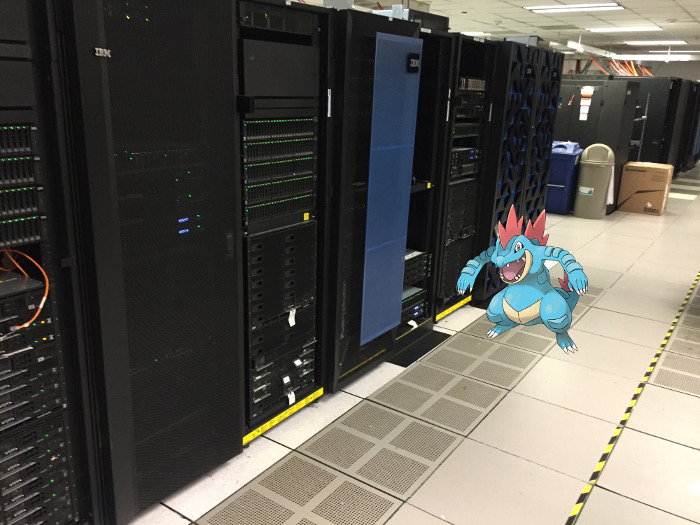
Gremlins

Software developers are too quick, I think, to blame unexplained bugs on a random memory overlay.

By the same token, hardware folks are, I think, too quick to blame gremlins.

However, after seeing incontrovertible evidence, I had to beg our lab team’s forgiveness the other day for having doubted them:

gremlin

Overview of PureApplication HA and DR

When I visited IBM customers and business partners in Bangkok and Manila last week, many of our conversations revolved around high availability and disaster recovery.

I previously contributed to an IBM Redbook on high availability and disaster recovery in PureApplication System that you can refer to as a resource. But now I’ve also completed a new overview presentation on implementing high availability and disaster recovery in PureApplication System. This presentation provides some background on HA and DR best practices in PureApplication System, summarizes the PureApplication features that serve as HA and DR building blocks, identifies a number of topologies that you can build using these building blocks, and closes with some important detailed considerations.

I hope you find this helpful as you design, implement, and test your solution!

PureApplication in Thailand and the Philippines

PureApplication in Thailand and the Philippines

Last week I spent time in Bangkok and Manila with the IBM PureApplication local teams and with IBM’s customers and business partners. It’s exciting to see continued growth in production workloads running on PureApplication System in ASEAN.

There were two repeated themes to many of our conversations. First was the importance of PureApplication’s pattern technology for building a DevOps pipeline that allows application and infrastructure teams to build greater confidence in the handoff from team to team between QA and production. Second was the strong interest in building high availability or disaster recovery solutions using PureApplication System. PureApplication provides many building blocks, such as GPFS and disk replication, that can serve as foundations for building HA and DR solutions.

See also: PureApplication High Availability and Disaster Recovery

Cookie size in nginx

I find in the age of corporate single sign-on and the multiplication of web applications and services, that more and more frequently I am running into server-side limits on cookie size. All of these servers and services are polluting my browser with their cookie crumbs. This results in web applications returning a 400 error due to header or cookie size limits.

While many web applications are beyond my control, I am taking the time to adjust my own servers so that they can accommodate these growing cookies. For nginx I’ve made the following adjustment to the server clause in my nginx configuration:

server {
  large_client_header_buffers 8 64k;
  client_header_buffer_size 64k;
  . . .
}

Understanding how the PureApplication placement engine works

IBM’s PureApplication products (System, Software and Service) include a sophisticated placement engine that works to manage and optimize factors such as system availability, application availability, CPU usage, and licensing.

But perhaps you’ve found yourself wondering just how, when and why PureApplication makes its placement decisions. Why did this virtual machine get migrated? Why didn’t that one get migrated? To help answer questions like these, Roy Brabson, Hendrik Van Run and I have just published an article describing in detail how virtual machine placement works in PureApplication System, Software and Service. We hope that this satisfies your curiosity!

PureApplication's two placement tiers

Ansible Playbook for Wekan

Ansible Playbook for Wekan

My team is experimenting with using open-source tools deployed internally for Kanban cards.

One tool we are exploring is Wekan, formerly known as Libreboard.

I deployed a Wekan instance to a RHEL 7 virtual machine for our testing. For this deployment, I wrote a simple Ansible playbook with a few additional configuration files (nginx config, Node PM2 configuration), in case there is ever a need to re-deploy the instance.

You can find my playbook and associated files on Github: wekan-setup. The files are as follows:

  • purekan.yml—Ansible playbook
  • wekan.yml—Node PM2 configuration
  • wekan.conf—nginx proxy configuration

You’ll need to customize things slightly based on your domain name or if you are using a distribution other than RHEL.